World Cup conversation guide

Vozinha's Blue Sharks

Cabo Verde turned a first World Cup into a goalkeeper-led underdog story casual fans can retell.

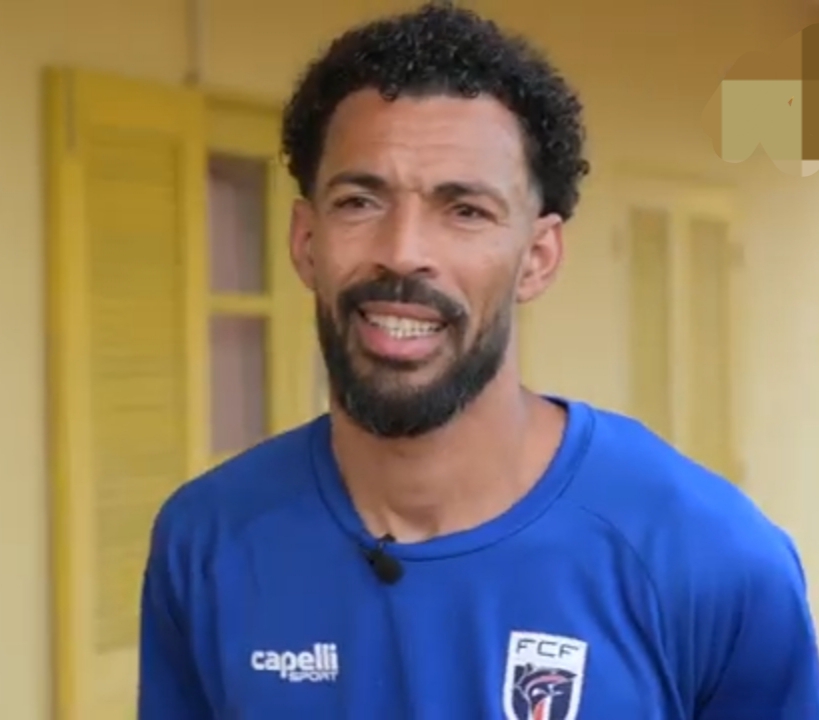
Vozinha, Cabo Verde goalkeeper, wearing a blue national team training top.

Photo: Nha Terra Nha Cretcheu, CC BY 4.0, via Wikimedia Commons.

The short version

1 small nation. 1 fearless keeper. Cape Verde, also known as Cabo Verde, turned a debut World Cup into a global underdog story.
524,877 Population in 2024, according to World Bank data.
10 Atlantic islands, with nine inhabited.
2026 First FIFA World Cup appearance.
Blue Sharks The nickname that suddenly sounds cinematic.
Updated June 27, 2026

Quick answer: why is Cabo Verde a World Cup story?

Cabo Verde became a 2026 World Cup underdog story because a first-time tournament nation with about half a million people reached the knockout stage behind veteran goalkeeper Vozinha, coach Bubista, and a compact Blue Sharks team shaped by island identity and diaspora pride.

This guide explains who Vozinha is, where Cabo Verde is, why the team are called the Blue Sharks, what happened in Group H, and which players new fans should know.

What actually happened in Group H?

The reason Cabo Verde feels bigger than a normal debut story is that the Blue Sharks did not just show up, take photos, and go home. They survived a group with former world champions, a major South American side, and a Saudi team that still had something to chase on the final day.

Three matches, three draws, and enough composure to finish second: that is the clean version. The emotional version is better. Players were reportedly watching the other result on a phone after their own match, waiting for confirmation that the country's first World Cup had become a knockout-round story.

Match 1 Spain held

A 0-0 draw against Spain gave neutral fans the first reason to look twice. Vozinha's saves moved him from squad-sheet name into the wider World Cup conversation.

Match 2 Uruguay resisted

A 2-2 draw against Uruguay turned the story from one-night surprise into something sturdier. Kevin Pina's free kick became one of the country's first great World Cup clips.

Match 3 Saudi Arabia survived

The final 0-0 with Saudi Arabia was not glamorous, but it was tournament football at its purest: manage the risk, protect the point, wait for the table to become history.

Why this matters beyond the results

Every World Cup has technically interesting teams. The teams that break through culturally usually have a simpler hook. Cabo Verde's hook is almost unfairly strong: first appearance, tiny population, veteran goalkeeper, island identity, diaspora pride, and a nickname that sounds like it was written for a movie poster.

Why did everyone suddenly start talking about them?

Because Cabo Verde gives people a story they can explain in one sentence and then keep adding layers to. That is rare. A casual fan can say "tiny island nation with a heroic goalkeeper" and be right. A football nerd can talk about spacing, rest defense, wide outlets, and goalkeeper command. A diaspora fan can talk about identity.

Hook 1

Scale shock

A country of roughly half a million people competing with football giants is instantly legible. You do not need context to understand the odds.

Hook 2

A face to remember

Vozinha gives the story a main character: older, calm, expressive, and easy for cameras and fans to attach emotion to.

Hook 3

Blue Sharks branding

The nickname does real work. It makes the team feel distinctive before people even know the squad.

Hook 4

Diaspora energy

Cabo Verde communities abroad give the story a second life in bars, family chats, local news, and social feeds.

Start with Vozinha. He is the human doorway into the whole story.

Most people do not discover a new team through a tactical diagram. They discover it through a face, a save, a stare, a moment that feels bigger than the scoreboard. For Cabo Verde, that face is veteran goalkeeper Vozinha, born Josimar Dias.

Public reporting from CAF, FIFA, and tournament media frames Vozinha as one of the breakout figures of Cabo Verde's 2026 run, especially after the draw with Spain and the later push into the knockout places.

Why he works as the page's main character

Vozinha is not just a stat line. He carries three things casual readers understand immediately: age, pressure, and composure. A 40-year-old goalkeeper standing between elite attackers and a first-time World Cup nation is a clean story even for someone who does not follow football.

Before the noise Long-serving national team presence, already known across African football.
The viral moment His performance against Spain gave neutral fans a reason to choose Cabo Verde as their underdog.
The bigger meaning He turns a country's football debut into a story about patience, diaspora pride, and emotional control.

What to watch when he plays

  • How early he talks to the back line before crosses and second balls.
  • How long he waits before committing on close-range shots.
  • How his calm changes the body language of defenders around him.
  • How quickly he slows the match after Cabo Verde has survived a dangerous sequence.

Why a goalkeeper makes the best hero

Underdog teams often spend long stretches defending. That naturally puts the keeper at the center of the camera frame. Every save feels like the country staying alive for one more minute, which is why Vozinha's role is emotionally easier to grasp than any formation graphic.

The supporting cast: more Blue Sharks worth knowing.

For a useful fan guide, the point is not memorizing all 26 names. It is knowing which players explain the team's personality: old guard, diaspora paths, defensive resilience, midfield bite, and runners who turn survival into threat.

Captain / forward

Ryan Mendes

The veteran attacking reference point. If Vozinha gives the story its emotional spine, Mendes gives it an experienced voice going forward.

Midfield spark

Kevin Pina

A name tied to Cabo Verde's first big scoring memories of the tournament and the kind of central energy that makes counterattacks breathe.

Defensive marshal

Pico Lopes

One of the easiest defenders to explain to new fans: organization, aerial presence, and the calm needed when the favorite has the ball.

Modern diaspora story

Roberto Lopes

Often discussed for the unusual route by which Cabo Verde identified him, he is the perfect bridge between diaspora scouting and national identity.

Experience

Garry Rodrigues

A wide attacker with years of international know-how, useful for explaining why this team is not just a feel-good novelty.

Old guard

Stopira

The kind of long-serving figure who makes a first World Cup feel like the payoff to a generation of work.

Back line

Logan Costa

A defender new fans can watch when they want to understand how Cabo Verde absorbs pressure without panicking.

Pace / outlet

Dailon Livramento

The runner profile matters because Cabo Verde's best moments often start when they survive pressure and break into space.

Coach

Bubista

The manager gives the run its organizing voice: compact, patient, emotionally controlled, and built around the belief that a small team can stay in games long enough to matter.

Wide threat

Willy Semedo

A useful attacker for new fans to track because his job is direct: stretch the back line, attack loose space, and make counters feel possible.

Defensive depth

Diney

Part of the defensive group that lets Cabo Verde absorb pressure without turning every attack into chaos.

Midfield work

Jamiro Monteiro

A useful name for explaining the team's middle third: not always flashy, but essential when the team needs to connect recovery with release.

How the squad is built

The full 26-player list in CAF's squad announcement shows the pattern: several goalkeepers, a deep defensive group, midfielders with European club experience, and attackers who can carry the ball into open space. It is not a squad built around one superstar; it is a squad built around roles.

Goalkeepers

Vozinha is the headline, but the position group matters because goalkeeping is the emotional center of an underdog tournament.

Defenders

The back line has to live with crosses, cutbacks, and long stretches without the ball. Their job is to make pressure look survivable.

Midfielders

The midfield is where Cabo Verde stops being passive. Win one duel, find one outlet, and the whole match changes temperature.

Forwards

The attackers are asked to do lonely work: chase clearances, hold the first pass, and make defenders run toward their own goal.

Where is Cabo Verde, and why does the country feel so vivid now?

Cabo Verde is an Atlantic archipelago off West Africa, about 500 kilometers from the coast. English speakers often say Cape Verde; the country's official English name is Cabo Verde, which is why both names appear in search results, headlines, and fan conversations.

The quick geography answer

Ten islands, nine inhabited, sitting in the Atlantic west of Senegal. That geographic smallness is part of why the World Cup story travels so well.

The cultural answer

It is a country with Portuguese colonial history, Kriolu in everyday life, huge diaspora communities, and a music culture many outsiders first meet through Cesaria Evora.

The football answer

The Blue Sharks are not built like a giant domestic-league machine. They are a national identity stitched through clubs, diaspora networks, and tournament discipline.

The naming answer

"Cape Verde" is still common in English searches. "Cabo Verde" is the official English name and the one used by FIFA. A good guide should naturally include both.

Language

Portuguese is the official language; Kriolu is central to everyday life and identity. That bilingual texture is part of the country's voice.

Music

Many outsiders first meet Cabo Verde through morna and Cesaria Evora, whose music carried island longing to global audiences.

Diaspora

Large communities abroad mean a World Cup run is not confined to the islands. It spreads through Lisbon, Rotterdam, Boston, London, and family networks everywhere.

Tourism

The islands are already known for beaches, wind, and Atlantic light. Football gives casual visitors another emotional doorway into the country.

Quick country facts

RegionAtlantic archipelago west of mainland Africa
PopulationAbout 524,877 in 2024, according to World Bank data
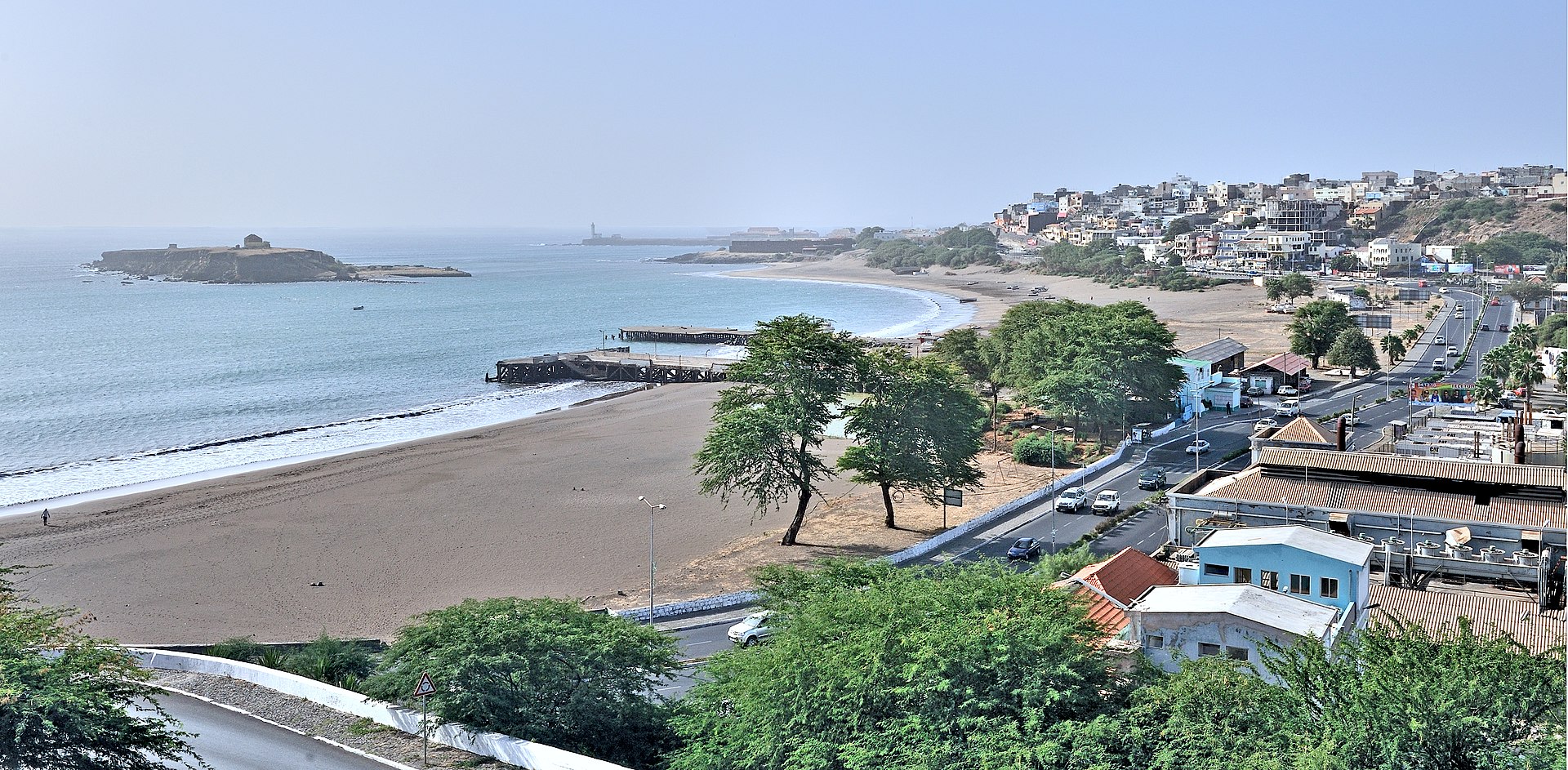
CapitalPraia, on Santiago island
Official languagePortuguese, with Cabo Verdean Kriolu widely spoken
Football nicknameBlue Sharks

The real places behind the Blue Sharks story.

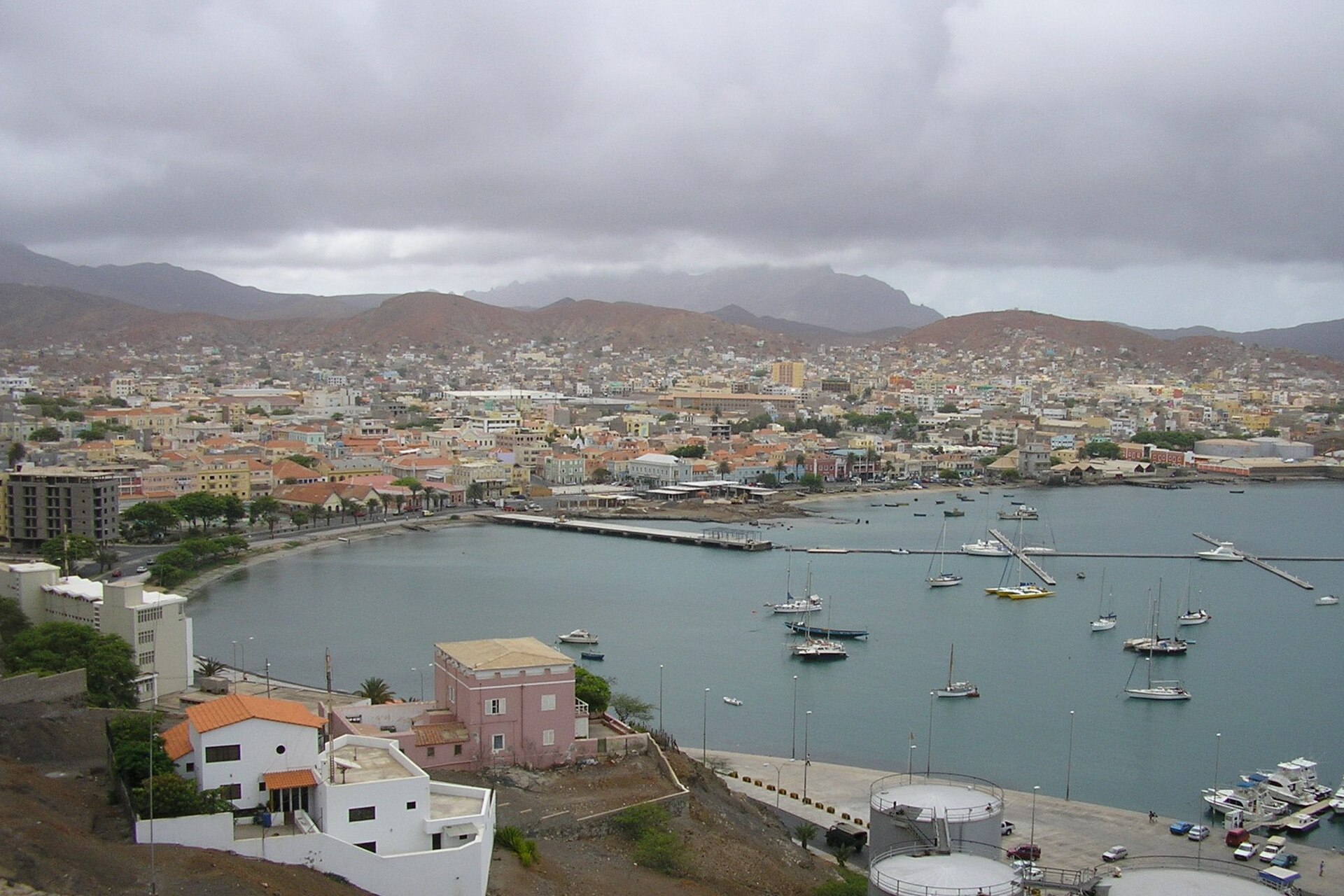
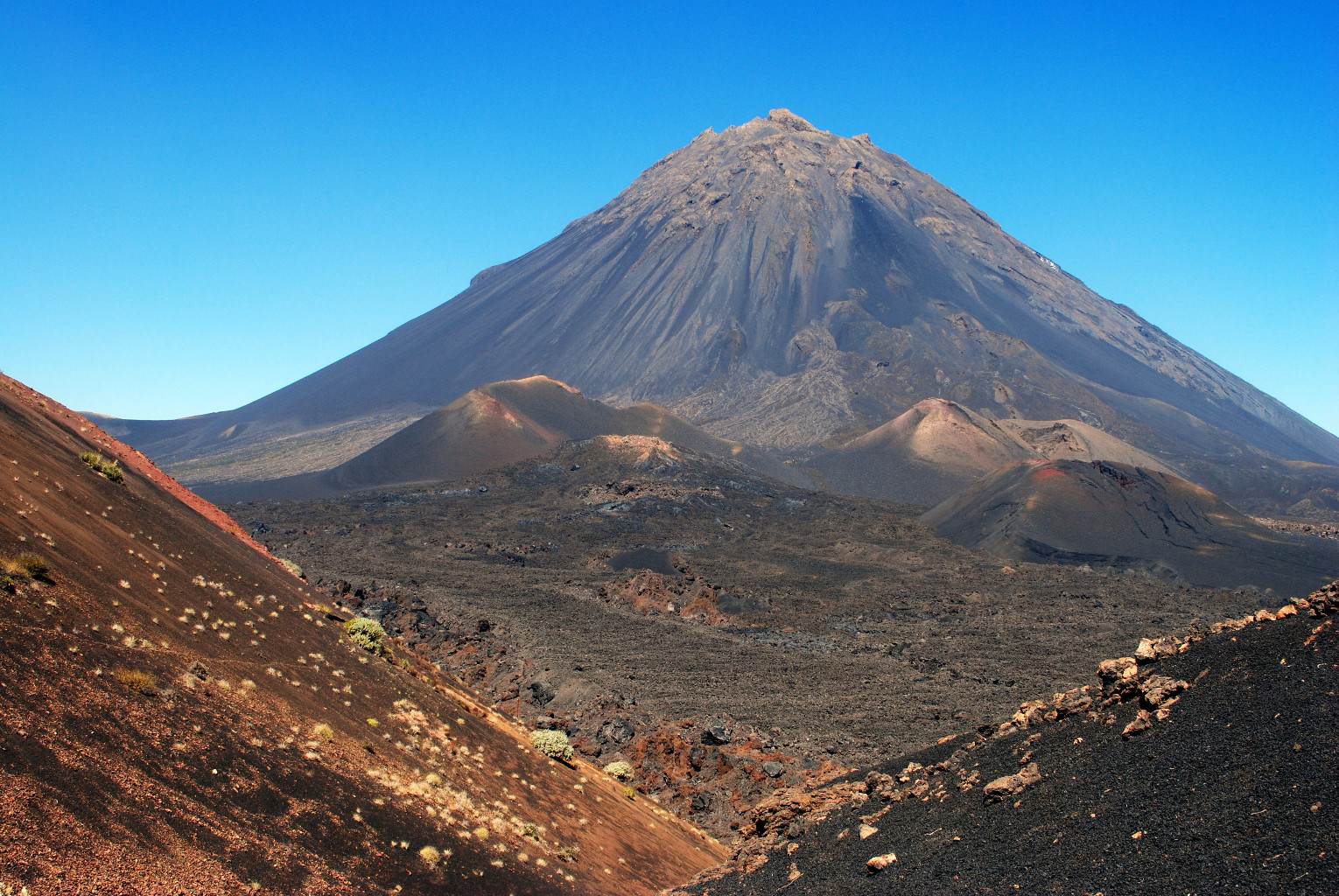
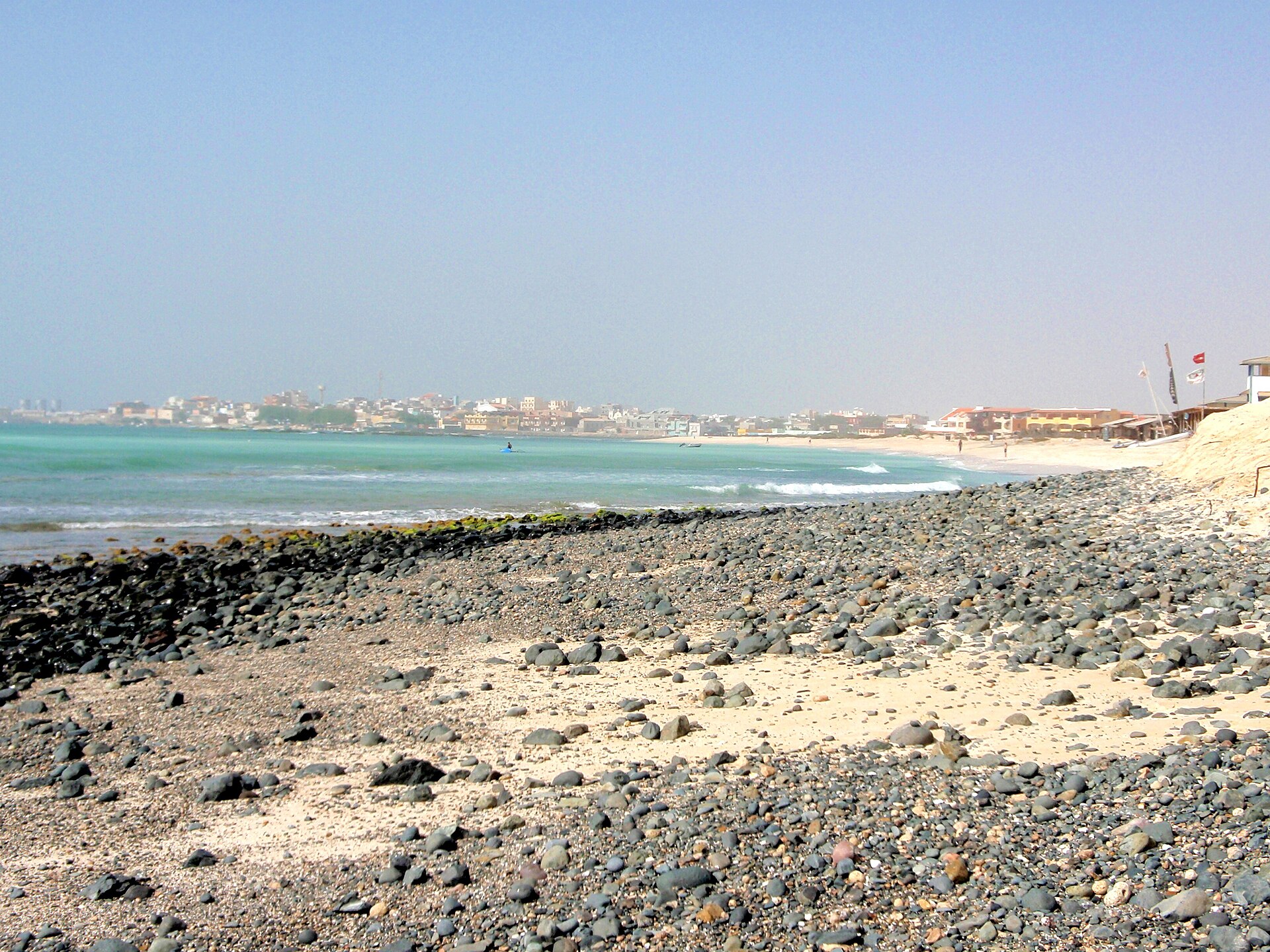
Real photographs help the page feel less like a football trivia card and more like a country readers can picture. Cabo Verde's World Cup hook is sport, but the memory comes from coastlines, port cities, volcanic ground, and island light.

Mindelo bay and town on Sao Vicente island in Cabo Verde.
Mindelo, Sao Vicente

A port city tied to culture.

Mindelo is often associated with music, nightlife, and the island culture that makes Cabo Verde feel larger than its population.

Photo: Manuel de Sousa, CC BY-SA 3.0, via Wikimedia Commons.
Pico do Fogo volcano rising from dark volcanic land in Cabo Verde.
Pico do Fogo

The landscape is not only beaches.

Fogo's volcano gives the country a more rugged visual register: black earth, altitude, and a reminder that the islands are geologically dramatic.

Photo: Pascal Givry, CC BY-SA 3.0, via Wikimedia Commons.
Sal Rei beach on Boa Vista island in Cabo Verde.
Sal Rei, Boa Vista

Atlantic light explains the travel pull.

Boa Vista's beach image is useful because many new football fans will meet Cabo Verde as a travel idea moments after meeting it as a team.

Photo: Kojote, CC BY-SA 3.0, via Wikimedia Commons.

Small stories that make Cabo Verde easier to remember.

The best World Cup pages do not only list facts. They give people small, repeatable stories: a phone held in a huddle, a keeper named through old World Cup memories, a singer who carried island longing across the world, and a defender found through LinkedIn.

A team gathered around one phone.

After the Saudi Arabia draw, Guardian reporting described Cabo Verde's players and coach Bubista crowding around a mobile phone to follow Uruguay's match against Spain. That is why the moment works so well online: the entire country's fate briefly shrinks into one screen.

It is more human than a table. Everyone understands waiting for one update that changes everything.

Source: Guardian match report

Before football, many outsiders heard Cabo Verde through morna.

Cesaria Evora made the islands easier for the world to feel before the Blue Sharks made them easier to cheer. Nonesuch describes her as the Cape Verdean singer known as the "Barefoot Diva" and one of morna's best-known voices.

Source: Nonesuch biography

The country is small. The feeling is not.

Cabo Verde's football identity stretches through families and clubs abroad. A small archipelago can feel much larger when fans in Portugal, the Netherlands, Ireland, the United States, and elsewhere all recognize the same flag.

Roberto Lopes turns scouting into a modern fable.

The short version is irresistible: an Irish-born Shamrock Rovers defender with Cabo Verdean family roots becomes part of the national team story after a LinkedIn approach. It is the kind of detail that explains how modern small-country squads are built.

Sources: CAF squad note and SABC Sport.

Bebe is the famous name to mention carefully.

Many football fans remember Bebé because of his unusual Manchester United chapter. He is not listed in CAF's 2026 Cabo Verde squad announcement, so the better use is context: Cabo Verdean football reaches people through many routes, including famous careers that sit outside this exact roster.

Sources: Manchester United and CAF squad note.

The deeper story index: names, streets, diaspora, and belief.

These are the angles that give a fan page real depth. Each one is small enough to retell, but together they explain why Cabo Verde feels larger than its population.

Vozinha origin

A goalkeeper name that starts in the 1986 World Cup.

CAF's profile says Vozinha, born Josimar Dias, explained that his name carries a football story tied to the 1986 tournament, with Jorge Valdano and Brazil's Josimar part of the family memory. That makes him a perfect World Cup character: his own name already sounds like a tournament archive opening.

CAF also recounts the nickname story from childhood, when friends teased him about going back to his grandmother after rough knocks.

Source: CAF Vozinha profile
Qualification night

The party began before the tournament.

Cabo Verde's World Cup story did not start in Group H. It started when qualification turned into a national celebration, with a small Atlantic country reaching the men's World Cup for the first time and suddenly carrying the kind of expectation usually reserved for giants.

The useful framing for readers: the World Cup was not a marketing opportunity first. It was a public memory being made in real time.

Sources: FIFA team hub and CAF squad feature
Bubista

The coach gives the underdog story a voice.

Guardian coverage after the Saudi Arabia match quoted Bubista's impossible-is-possible framing before the Argentina knockout tie. That is not just a nice line. It tells new fans how the team wants to be understood: disciplined, proud, and not embarrassed by ambition.

Source: Guardian Bubista story
Diaspora mood

One country, many viewing rooms.

The emotional map is bigger than the archipelago. Guardian reporting on the UK diaspora shows the run spreading through immigrant families, restaurants, watch parties, and friends who suddenly have to explain why this little team matters so much.

Source: Guardian diaspora report
Kevin Pina

The free kick matters because it becomes shorthand.

Kevin Pina's free kick against Uruguay is easy to reuse in fan content: set-piece precision, tournament pressure, and a moment that belongs to the whole country rather than just the scorer.

Source: Guardian match context
Music thread

Morna helps outsiders understand the emotional register.

It is easy to flatten Cabo Verde into beaches and football. Morna gives the country a deeper sound: longing, distance, memory, and return. UNESCO lists morna as a musical practice of Cabo Verde, and Cesaria Evora remains the easiest doorway for many outsiders.

That cultural thread makes the football story feel less random. A diaspora team, an island country, and songs about distance all speak to the same emotional geography.

Sources: UNESCO and Nonesuch
Praia angle

The capital turns global attention local.

Praia is useful in the page because it grounds the story. Instead of a flag floating on TV graphics, readers can imagine streets, cafes, families, and coastline reacting to each result.

Old guard

Stopira and Ryan Mendes make it generational.

CAF's squad note places long-serving names such as Vozinha, Ryan Mendes, Garry Rodrigues, and Stopira beside younger players. That is the generational payoff angle: the debut is not only for the newest stars.

Source: CAF squad feature
How does a country this small build a World Cup team?

Without behind-the-scenes access, the honest answer is not a secret training schedule. The public pattern is clearer and more useful: diaspora scouting, club-level development, disciplined national team camps, and a style that accepts pressure before striking quickly.

1

Diaspora scouting

Many eligible players develop in Portugal, the Netherlands, France, Ireland, the United States, and beyond. The national team turns that spread into depth.

2

Club rhythm

Most day-to-day training happens at professional clubs. International windows are about roles, trust, and making the group coherent quickly.

3

Defensive patience

The Blue Sharks can spend long stretches without the ball. The trick is not looking rushed when the opponent is supposed to be superior.

4

Fast outlets

When they win it, the first forward pass matters. That is where runners, set pieces, and second balls turn survival into threat.

A realistic match-week picture

National teams do not teach every habit from scratch during a World Cup. They compress. A typical camp has to clarify who presses, who covers, who attacks the second ball, who takes restarts, and what the goalkeeper wants from defenders in front of him.

  • Video sessions simplify the opponent into two or three repeatable threats.
  • Defensive drills focus on spacing between fullbacks, center backs, and the holding midfielder.
  • Set pieces become a serious source of control for a team that may not dominate open play.

The tactical personality

Cabo Verde's public tournament identity is not "we will out-pass everyone." It is closer to: stay compact, keep emotional control, make the opponent impatient, then run hard when space appears.

  • Vozinha controls tempo after saves and claims.
  • Midfielders protect the center before chasing wide.
  • Forwards accept long defensive shifts and wait for transition chances.

What should new fans watch next?

If you are watching Cabo Verde for the first time, do not try to track all eleven players at once. Pick a few patterns and the match becomes much more fun.

Watch 1

The first save after pressure

That moment tells you whether the team is merely surviving or still emotionally settled.

Watch 2

The first pass after a tackle

A small team becomes dangerous when the recovery is followed by a forward pass instead of panic.

Watch 3

Set-piece body language

Underdogs often steal control from dead balls. Notice who organizes, who attacks zones, and who stays back for protection.

Watch 4

The crowd after a clearance

For teams like this, a clearance can feel like a goal because it confirms the story is still alive.

One-line version

A 40-year-old keeper, a half-million-person nation, and the World Cup's easiest underdog to root for.

Text this to a football friend "Cabo Verde are basically the perfect underdog: tiny island nation, first World Cup, veteran keeper going full movie mode."
Text this to someone casual "You do not need to know tactics. Just watch Vozinha for five minutes and you will understand why everyone adopted them."
Text this as a flirty opener "My World Cup personality is pretending I discovered Cabo Verde before everyone else. What is yours?"

For a casual group chat

"Cabo Verde might be the best World Cup subplot: tiny island nation, first appearance, veteran keeper, Blue Sharks nickname. Almost too perfect."

For someone who likes travel

"I started watching for football and ended up reading about Cabo Verde's islands, music, and diaspora. Sports are dangerous like that."

For a date chat

"Important question: are you a loyal-to-your-country World Cup person or do you adopt the most cinematic underdog immediately?"

FAQ for people who just discovered the Blue Sharks.

Who is Vozinha?

Vozinha is the nickname of Josimar Dias, Cabo Verde's veteran goalkeeper and the easiest player for new fans to remember from the 2026 World Cup story.

Where is Cabo Verde?

Cabo Verde is an Atlantic island country off West Africa, west of Senegal. It has ten islands, nine inhabited, and a capital city called Praia.

Is it Cape Verde or Cabo Verde?

Both appear in English-language coverage, but Cabo Verde is the country's official English name. People still search for Cape Verde, so guides should use both naturally.

What are the Blue Sharks?

The Blue Sharks are Cabo Verde's national football team. The nickname helps the team stand out because it feels specific to the islands and easy for neutral fans to remember.

How did Cabo Verde do in Group H?

Cabo Verde drew with Spain, Uruguay, and Saudi Arabia in this page's tournament storyline. Those results were enough to finish second and turn a debut campaign into a knockout-round story.

Who are Cabo Verde's key players?

Start with Vozinha, then know Ryan Mendes, Kevin Pina, Pico Lopes, Roberto Lopes, Garry Rodrigues, Stopira, Logan Costa, Dailon Livramento, Willy Semedo, and Jamiro Monteiro.

Are they only famous because they are small?

No. The small-country angle makes the story travel, but the football reason is their organization, defensive courage, and ability to turn limited chances into real moments.

Why does Cabo Verde's diaspora matter?

For a small country, eligible players and fans abroad expand the football story. The team carries the islands, but the support also travels through families and communities overseas.

Who coaches Cabo Verde?

Bubista is the head coach most associated with this World Cup run. For new fans, he is best understood as the organizer of a compact, disciplined team rather than a celebrity-manager figure.

What is their style of play?

Publicly, the tournament identity reads as compact defending, patient goalkeeper-led control, hard midfield work, and quick transitions into space.

Can this page be used as a fan guide?

Yes. It is designed as an independent fan guide with country context, player notes, story angles, source links, and simple conversation starters for people new to Cabo Verde.

Can I use official World Cup logos on a fan page?

Avoid it unless you have permission. Use factual language, original artwork, licensed photos, and clear wording that the page is editorial, not official.

Is this page official?

No. This is an independent editorial guide by KnoKno. It does not use official tournament marks and should not be confused with FIFA, CAF, or the Cabo Verde Football Federation.

Sources used for this guide.

This page is an independent editorial guide by KnoKno, not an official FIFA, CAF, or Cabo Verde Football Federation page. The hero portrait and place photographs are open-license media with visible attribution.

FIFA team page

Official tournament hub for Cabo Verde news, fixtures, and results at the 2026 World Cup.

Open FIFA source

CAF squad and Vozinha coverage

CAF coverage frames the Blue Sharks as a historic debut side and highlights Vozinha's goalkeeper story.

Open CAF source

CAF Vozinha name story

CAF's Vozinha profile explains the Josimar Dias name story, the 1986 World Cup connection, and the childhood nickname detail.

Open CAF Vozinha profile

Vozinha portrait

The hero portrait is a Wikimedia Commons image of Vozinha, sourced from a YouTube CC BY 4.0 video by Nha Terra Nha Cretcheu.

Open Vozinha image source

Guardian match and country explainers

The Guardian's tournament reporting explains the latest World Cup run, diaspora reaction, and why neutral fans are talking about Cape Verde.

Open Guardian source

Guardian Bubista story

Guardian coverage after the group stage captures Bubista's nothing-is-impossible framing before the Argentina knockout tie.

Open Guardian Bubista source

Guardian diaspora report

The diaspora story explains how Cabo Verde's World Cup run travels through communities far beyond the islands.

Open Guardian diaspora source

Roberto Lopes LinkedIn story

SABC Sport reporting covers how the defender's national team route became a modern diaspora-scouting story.

Open SABC source

Cesaria Evora and morna

Nonesuch's biography gives the cultural context behind Cesaria Evora, morna, and Cabo Verde's global musical memory.

Open Nonesuch source

UNESCO morna listing

UNESCO's intangible heritage listing supports the page's cultural framing of morna as a Cabo Verdean musical practice.

Open UNESCO source

Diaspora context

The International Organization for Migration describes Cabo Verde as a country of emigration with a large population living abroad.

Open IOM source

Bebe career context

Manchester United's own archive and CAF's squad note help separate Bebé's famous football story from the current 2026 squad list.

Open Manchester United source

World Bank country data

Population and archipelago facts come from World Bank Cabo Verde data and country overview pages.

Open World Bank source

Real Cabo Verde photography

Praia, Mindelo, Pico do Fogo, and Sal Rei photos are used from Wikimedia Commons under CC BY-SA 3.0 with visible attribution on each image card.

Open Wikimedia Commons source

Turn World Cup moments into better conversations.

KnoKno helps you read the vibe, find a natural opener, and reply without sounding like a press release pretending to be a person.

Try KnoKno